
How Much Does Size Matter in Retail Media? An Argument for the Viability of the Long Tail
Will the long tail of Retail Media shrink in 2025? Despite concerns about limited budgets, Retail Media Networks (RMNs) operate differently from traditional media. This post highlights four reasons why RMNs’ long tail is sustainable. For mid-market retailers or those launching an RMN, discover why 2025 is the time to embrace Retail Media.
· 3 min read
Updated
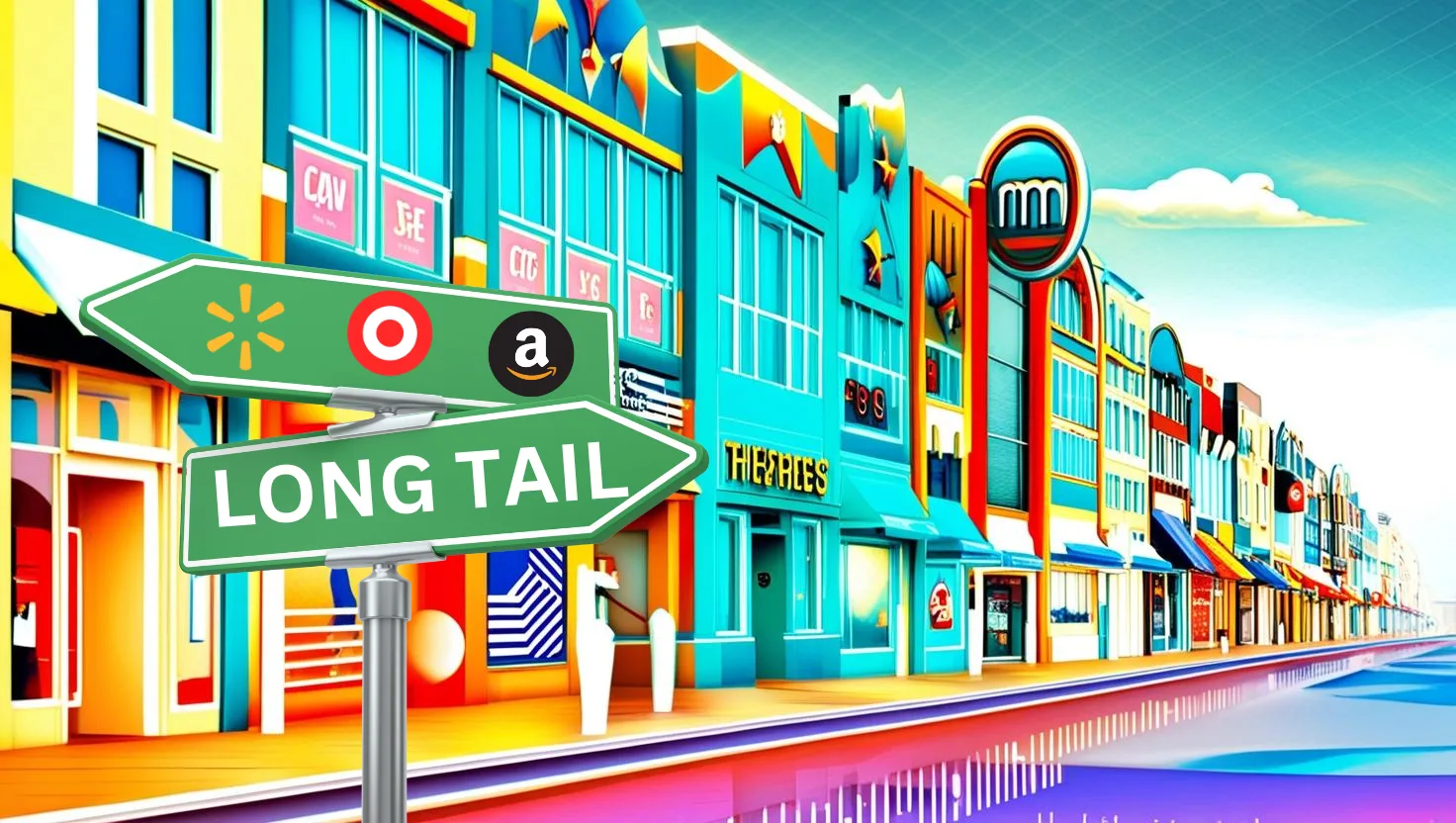
I’ve seen quite a few editorials recently predicting a shrinking of Retail Media’s long tail this year based on the idea that budgets are finite and “there just isn’t enough to go around.” While there may be some truth to this, this perspective seems rooted in the assumption that Retail Media is similar to traditional media long tails—which it is not. Here 4 key reasons why I believe Retail Media Networks’ (RMNs) long tail is a sustainable market and why you should lean into these businesses in 2025 if are a smaller mid-market retailer with an RMN or are contemplating launching one.
1. RMNs have marginal costs compared to traditional ad tech companies, publishers, or media platforms.
Outside of Amazon, most RMNs license their tech stack and pay for it through revenue sharing and/or fees on working media. This means there are no significant costs for retailers (and marginal costs for the tech provider), even if the RMN remains idle. In addition, there is still healthy competition among sell-side providers vying for mid-market business. So even retailers on the smaller size are getting a good amount of attention.
2. Retailers have access to trade/co-op and shopper marketing budgets that traditional media companies do not.
Trade, co-op, and shopper marketing budgets are funds that brands allocate to support their SKUs, UPCs, etc., at specific retailers through incentives, temporary price reductions (TPRs), and advertising. Any external advertising funded by co-op dollars is a cost. RMNs enable retailers to convert that advertising costs into margin. So hypothetically, $1 million in annual co-op and shopper budgets spent on ad costs could turn into $800,000 in revenue (assuming an 80/20 revenue share with their RMN ad tech provider). Shopper marketing campaigns are a bit different as brands have more discretion on how these budgets are spent and retailers already generate revenue from many traditional shopper marketing programs such as incentives, in-store, sampling, etc. However, RMNs can enhance this revenue opportunity by encouraging brands to allocate non-RMN shopper marketing ad campaigns to the RMN. Ex- shifting local radio spend to targeting online spend.

3. RMNs create an infrastructure that collects incremental data on customers with every campaign.
At the core of RMN ad tech is the ability to create connections between customer IDs and digital IDs - to target ad impressions, measure attribution, etc. This connection enables retailers to also collect insights on every RMN campaign which can then be appended to customer IDs and enhance profiles. This requires a customer data platform (CDP) layer which may be already integrated into retailers’ loyalty solution. But once in place, RMN campaign data can provide insights into how retailers’ marketing activities can impact the various stages of the customer lifecycle (i.e. - new category shoppers, frequent shoppers, re-activated shoppers, etc.).
4. Brands and agencies have not yet fully developed, tested, or optimized long-tail strategies.
Many brands and agencies are still in the early stages of establishing centers of excellence for Amazon and Walmart Connect. They have yet to invest time in evaluating and testing strategies to determine the potential value of RMNs' long tails. For example: Could challenger brands acquire new customers and grow category share more cost-effectively in RMNs’ long tail compared to Amazon or Walmart? Can loyalty or advocacy be built more effectively at the regional level versus the national level? Could the long tail serve as a testing ground for messaging, pricing, or other variables before launching campaigns nationally?
Conclusion
Fragmentation in any media channel creates audience dilution and buying inefficiencies, and Retail Media is no exception. For this reason, we’ll continue to see innovation on the buy side within companies like Skai, Criteo, Pacvue, and others. However, I don’t believe fragmentation will lead to a significant “culling of the herd” anytime soon. An RMN shutting down is more likely to result from a retailer closing, restructuring, or facing issues with their core business. So mid-market, tier-2, longtail, etc. retailers should continue to lean into their Retail Media strategy in 2025 and beyond.
Related Insights
Market Expansion & Growth Strategy
TAM Expansion As A Service (TEAAS)
By leveraging external GTM consultants, MarTech and AdTech companies can stay responsive to shifting market demands, optimize GTM costs, and seize new revenue opportunities—without straining internal teams or sacrificing momentum on core products. This approach not only accelerates time-to-market but also enhances a company's ability to innovate, grow, and thrive in an increasingly competitive marketplace.
November 7, 2026 · 2 min read

Market Expansion & Growth Strategy
The Evolution of Lifecycle Marketing: Embracing AI for Smarter Customer Journeys
Lifecycle marketing is shifting from manual workflows to AI-driven strategies, with reinforcement learning enabling real-time, personalized customer engagement across channels. Marketers are evolving into AI strategists, focusing on goal setting, customer experience tuning, and data collaboration while overseeing dynamic, automated customer journeys.
Chris Parker · November 7, 2026 · 3 min read
Market Expansion & Growth Strategy
2025 Retail Media Predictions
In 2025, Retail Media will be defined by one central driver: money. Both Retail Media Networks (RMNs) and their partners will prioritize strategies that grow revenue. Let's take a look at some of the trends that will define this booming $165 billion market next year.
November 7, 2026 · 4 min read